


.avif)
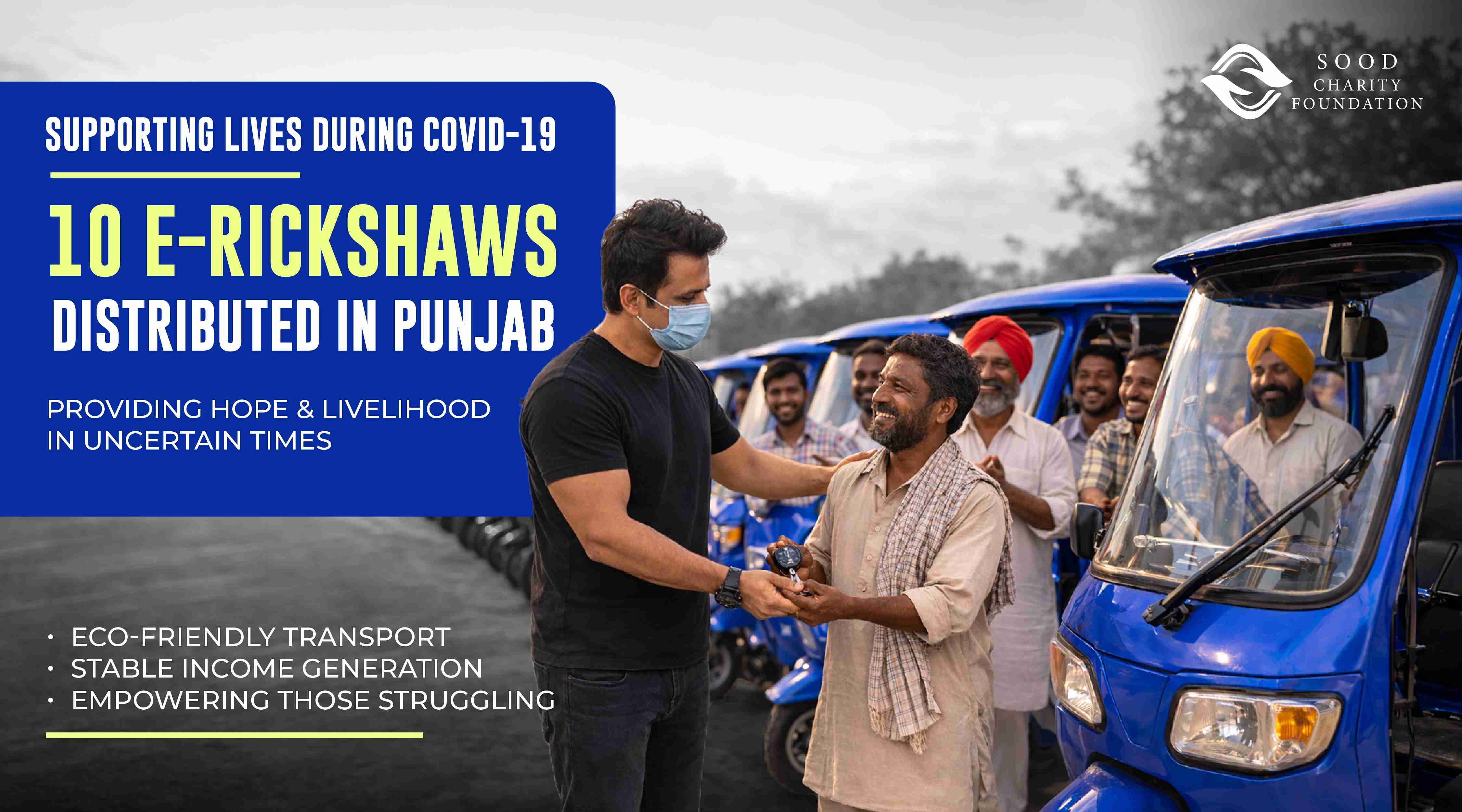
Distribution of 10 E-Rickshaws
Project Vidyarthi : Empowering Tomorrow’s Leaders
Background
The COVID-19 pandemic and its aftermath had a severe impact on daily wage earners and informal workers, especially those reliant on small-scale transport services. Many households faced significant income loss, highlighting the need for sustainable livelihood opportunities rather than short-term relief measures.
Objective
This initiative aimed to promote self-employment and environmentally friendly transportation by distributing 100 e-rickshaws to economically vulnerable individuals. The program focused on enabling stable income generation while improving local mobility services.
Why E-Rickshaws?
E-rickshaws offer a practical and sustainable livelihood solution:
- Low operating and maintenance costs
- Reliable source of daily income
- Environmentally friendly with low emissions
- Suitable for semi-urban and rural transportation needs
- By combining income generation with clean mobility, the initiative supports both economic recovery and environmental responsibility.
Implementation Approach
The project was executed through a structured and need-based process:
- Beneficiary Selection: Individuals were identified based on financial need and their ability to operate the vehicle
- Training & Guidance: Basic operational and maintenance orientation was provided
- Monitoring & Support: Community-level follow-up ensured effective and continued utilization
Impact & Benefits
- Sustainable Income Generation: Beneficiaries gained access to consistent daily earnings, supporting long-term financial independence.
- Improved Economic Stability: Households strengthened their resilience and recovered more effectively from pandemic-related income loss.
- Promotion of Green Mobility: The initiative contributed to reduced emissions by encouraging eco-friendly transport solutions within local communities.
- Social Empowerment: Recipients experienced increased confidence, dignity, and self-reliance through meaningful employment.
Conclusion
The distribution of 10 e-rickshaws provided a practical and lasting livelihood solution. By enabling income generation and promoting sustainable transportation, the initiative contributed to both economic recovery and environmentally responsible development in beneficiary communities.
Videos
Donate now
.svg)
.svg)


.png)


2026 Sood Charity Foundation. All Rights Reserved

2026 Sood Charity Foundation. All Rights Reserved

2023 Sood Charity Foundation. All Rights Reserved
Privacy Policy
Terms And Conditions
Sitemap

